


Orthopaedics
Treatment of articular cartilage

The role of cartilage is to absorb shock in the joint and thanks to its smooth surface to ensure smooth and painless movement in the joint. With age, however, cartilage loses its elasticity and strength and becomes thinner. If it is damaged, this can lead to swelling, pain and reduced mobility of the knee. When cartilage is damaged, it can develop defects of varying severity, soften, crack, or break.
This depends on the type of injury. It often takes place during arthroscopy, and magnetic resonance imaging (MRI) is also used. When articular cartilage is damaged, the continuity of the surface is compromised, which can result in various symptoms such as blockage or swelling. In less severe cases, the damage may be completely asymptomatic.
In the case of cartilage damage due to injury, the aim is to return the cartilage to the site of breakage (reinsertion). In cases of chronic cartilage damage, re-insertion is impossible. Some work can be performed during arthroscopy, such as removal of soft, non-nourished cartilage (debridement), regeneration and restoration of connective cartilaginous tissue replacing cartilage (refreshment), transfer of osteochondral plugs to the damaged site (mosaicplasty), cartilage transplantation, etc.
1. Consultation with a Surgeon
Your first step is a consultation with one of our specialists. The doctor will assess your health condition, explain the procedure in detail, and recommend the most appropriate treatment approach.
2. Pre-Operative Preparation
Before the procedure, you will undergo the necessary examinations and receive clear instructions on how to prepare for surgery.
3. Day of Surgery
You will arrive at the clinic at a pre-arranged time. After the necessary preparation, the surgical procedure itself will take place.
4. Short Post-Operative Monitoring
Following the procedure, you will remain for a short period in the recovery room under the supervision of our medical staff.
5. Return Home
In most cases, patients are able to return home on the same day. Recovery then continues in the comfort of the home environment.
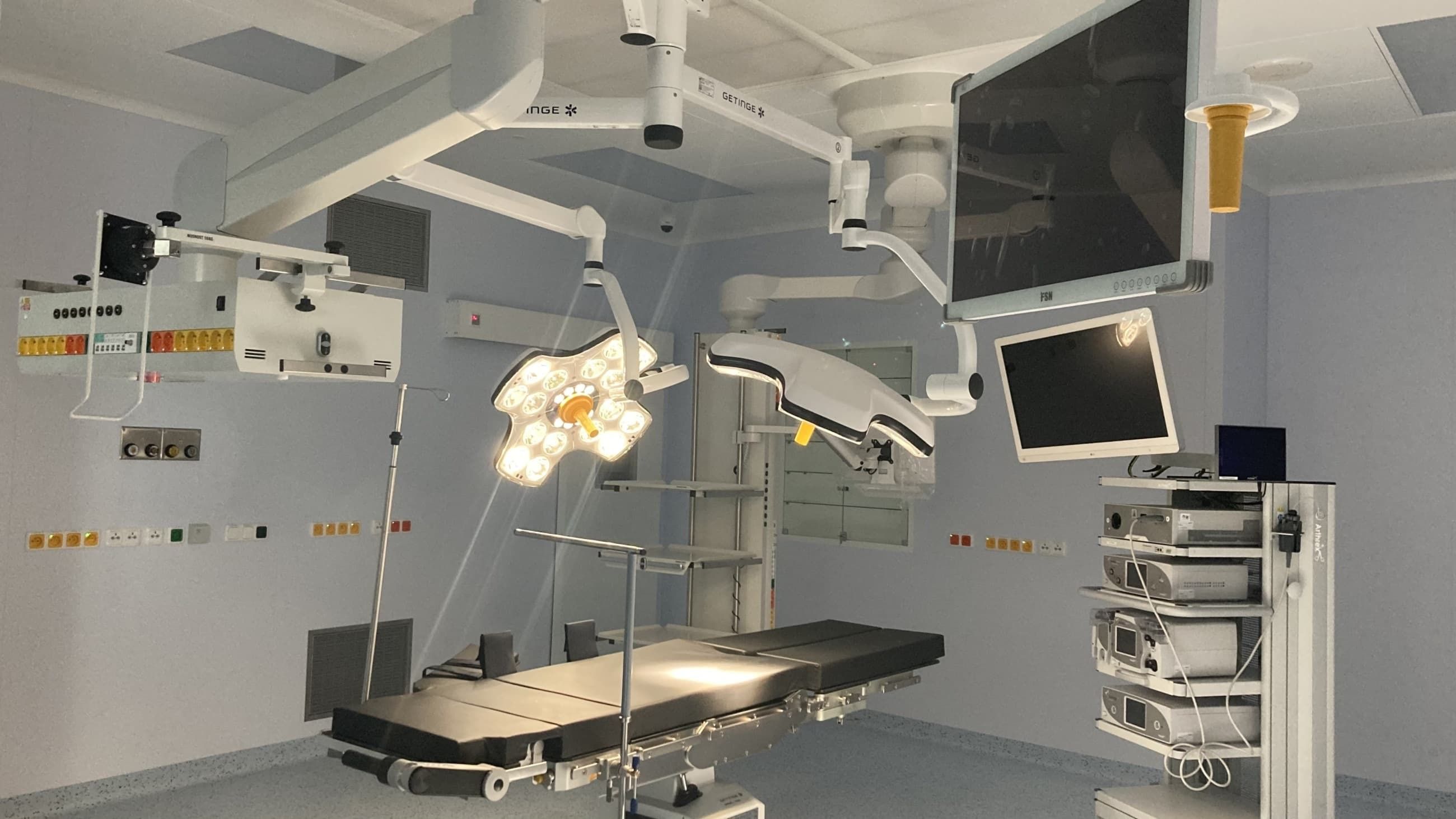
Team of surgeons
MUDr. Robert Frei
Head of Orthopaedics
More information on the procedure
Procedures are performed under general or local anaesthesia.
In an outpatient procedure, the patient is usually discharged home on the day of surgery. A rest period of at least 4 hours after surgery is advisable. Standing and walking should not be attempted until after this time, and with assistance. The type of injury and the chosen treatment have a major influence on recovery. The usual duration of incapacity for work after simple surgical arthroscopy is 2-4 weeks, but depending on the type of procedure performed, it may take longer and may be involve immobilisation in a brace.
After a basic cartilage procedure, i.e. after diagnostic and simple surgical arthroscopy, walking on crutches is recommended for at least 3 weeks, avoiding loading of the operated limb. For more complex procedures, a brace is recommended for approximately 6 weeks, depending on the type of procedure. It is advisable to supplement postoperative care with drugs that promote cartilage regeneration (chondroprotective agents).
Surgery with a Human Approach
Modern day-case surgery makes it possible to perform procedures without unnecessary hospitalisation. Patients attend their procedure at a pre-arranged time that takes their personal schedule into account. One of the advantages of MY CLINIC is the availability of prompt surgical appointments.
In most cases, patients return home the same day, or at the latest the following day. This eliminates the need for a prolonged hospital stay and allows for a quicker and more comfortable return to normal daily life.
At MY CLINIC, surgical procedures are performed by a team of experienced specialists with many years of practice and international certifications. We combine modern surgical techniques with a strong emphasis on patient safety and comfort.
A compassionate, patient-centred approach is equally important to us. We understand that the decision to undergo surgery may be accompanied by concerns—whether for yourself or for your child. That is why we strive to create an environment where you can feel at ease and confidently place your care in the hands of our doctors.
For paediatric patients, a parent is welcome to remain with the child until the induction of anaesthesia in the operating theatre. The presence of a parent helps the child feel more secure and comfortable before the procedure.
In the majority of cases, patients are discharged on the same day as their procedure. Where medically appropriate, a comfortable single room is also available, providing maximum privacy.
For us, a humane and empathetic approach is not an addition to medical care—it is its natural foundation.
Experienced Surgical Team
Procedures are performed by a team of highly experienced surgeons with many years of clinical practice. Our doctors use modern surgical techniques and regularly participate in professional training and international medical congresses.
We place strong emphasis on procedural safety, thorough pre-operative preparation, and an individual approach to every patient.
Day Surgery – A Rapid Return Home
Most surgical procedures are performed using minimally invasive techniques. Patients arrive for their procedure at a pre-arranged time and, after a short period of post-operative observation, are usually able to return home.
Recovery can therefore take place in the comfort of the patient’s home environment, without the risks commonly associated with prolonged hospital stays.
Modern Operating Theatres
All procedures take place in modern operating theatres equipped with advanced technology for minimally invasive surgery.
Our technical facilities allow for gentle surgical techniques, precise diagnostics, and the highest level of safety during operations.
Individualised Patient Care
Before surgery, each patient attends a consultation with their surgeon, during which they receive detailed information about the procedure, the type of anaesthesia, and the expected recovery process.
Patients are encouraged to ask questions and, together with their doctor, choose the most appropriate course of treatment.
Non-Binding Pre-Operative Consultation
If you are considering a surgical solution for your health concern, the first step is a consultation with one of our specialists.
During the appointment, the doctor will assess your health condition, explain the available treatment options, and recommend the most appropriate course of action.
You can book an appointment by telephone or via the contact form.
How our clients rate us

Pavlína Matlášková


I visited the clinic with my daughter and I was extremely satisfied with the approach of the doctors, the beautiful environment and the possibility to park directly in the building, which is not usual in Prague. About a month ago I needed...

Vasek Sluncik
I had an urgent back problem. Mr. Louda in physiotherapy helped me very well. He relaxed my back, went through exercises with me, explained the causes and suggested solutions. Of course, it's not that simple, it's up to me to change my lifestyle, but it sounded so...

Gabriel Koromház
I was very satisfied with my visit to the clinic. Nice airy and clean environment. The receptionists were very helpful and professional. They helped with everything and arranged everything needed quickly. I will definitely be happy to visit again. 😊

Petr Hrebak
Dr. Nejdl is a total professional. I am always pleased with the entire clinic staff and their approach, from the front desk and making an appointment to taking blood and finding a solution. Thank you for taking care of my person.

Iva Pavlíčková
I have already contacted this clinic several times with quite acute issues and they have always been helpful, I received appointments almost immediately, the staff has always been very kind and helpful, the doctors are professionals with a very kind approach...

Hana Innemanová
I use the services of the clinic repeatedly. Always an appointment on time, which is kept, short waiting time, enough time for examination, maximum satisfaction with the doctors, pleasant reception, environment, as a bonus parking in the building.

Minimally invasive, maximum care
One-day surgery is a concept that involves non-emergency surgical procedures. Its advantage is quick recovery and minimal pre- and post-op stress.

Quick return home
Patients can return home the same day or the day after the surgery. Shorter stays and quicker recovery make the entire process less demanding for clients and their families.

Modern procedures and the latest equipment
The use of certified instruments and high-quality modern technologies and procedures is routine for us. Several of our exceptional instruments are available only at several university hospitals.

A pleasant environment
The layout and interior design of our interiors, well-appointed rooms with all comforts and conveniences, a friendly atmosphere, pleasant and experienced staff. All this helps eliminate stress.

Lower risk of infection
Less time spent at the clinic means a lower likelihood of contracting common hospital infections.
A modern and comfortable environment
Our clinic is designed with your comfort and safety in mind. We combine modern technologies with a friendly environment to make every visit as pleasant as possible. Come explore our premises, which are as enticing as they are functional.


Are you interested in an examination for the procedure?
Contact our clinic.
Client line: +420 222 900 900

